.png)


The Prefecture's Founder Mr 'Q' On Tropical Tailoring, And Why Every Men Should Subscribe To It
Nqabeni Butholezwe Msimanga, better known as the charismatic Mr ‘Q’ to locals, founded The Prefecture in 2014 specialising in tropical bespoke menswear. He sat down for a candid sit-down interview with where he talked about his business and aspirations for it.
STRAITS INSIDER
Tell us about your creative journey.
It started with an obsession with my grandfather’s manner of dressing. He was a very well-dressed man. From as young as eight-years old, I would copy his dressing style. Fast-forward to thirteen-years old, I moved to London, England. I leaned towards arts and literature in my studies there and eventually went to the then, London College of Printing (now, London College of Communication) and studied graphic design and specialised in typographic design; which explains my logo. I eventually branched into screen printing which evolved into textiles printing and subsequently began developing accessories such as scarves and men’s jacket prints. I also did a short apprenticeship with a local British tailor and from there on, I focused my work on menswear.
Apart from your grandfather, was there anyone else you idolised growing up?
I grew up in a mostly male household. When I was 11-years old, I had about 55 first cousins. So in that sense, I looked up to the older men in family. My other role models were from classic films and the one that I remember most was Sidney Poitier; he was the first African-America to win an Academy award in the 1960s. I also watched a lot of cowboy films with my grandfather which starred the likes of Marlon Brando and James Dean. In terms of today’s generation, it would have to be Al Pacino, Robert De Niro and Denzel Washington. Mostly because I was jealous of the way they spoke and dressed. So that was where my own sartorial journey began.
Prior to establishing The Prefecture, what creative works did you do in Singapore?
When I moved to Singapore in 2012, I worked at a local tailoring brand and then I worked for an e-commerce brand called Zalora. I was their in-house menswear designer for a short while and then I branched out and started The Prefecture.


Why menswear and not womenswear?
There are several reasons: firstly, menswear on the surface is a lot simpler. The men’s
silhouette has not changed, for centuries. The volume of the silhouette may alter once in a while. Trousers has always had two legs. In that regard, womenswear has the complexity of constantly evolving. It evolves every three to five years. For the past 400 years, men’s clothing has not changed at all. So that was the technical reason. Men are also incredibly loyal customers by virtue of hating shopping. Once they find something they like, they stick to it.
What is the purpose of The Prefecture?
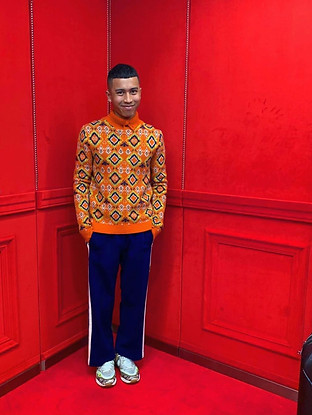
It was created as an alternative to an average tailor. There are hundreds of tailors in Singapore where you can get a white shirt from. Most of the time when someone look at my yellow shorts or pink short, it is not always associated with a tailor. So my idea was to make tailored clothings look like pret-a-porter but you would also know that pret-a-porter does not look well-cut. So all these prints here, to me, can be found at Zara. But at Zara, they carry seasonal clothing whereas for me, I’m a climate appropriate tailor who uses tropical floral prints. I love tropical floral prints. I used to do floral textiles myself. So this is what it is for; to show men that you can go into a tailor and not come out with just white shirts and blue shirts.
More Stories
STYLE
Singapore-based Hotelier Adrien Lahoussaye On The Right Way To Pack A Suit

STYLE
Photographer Turned Designer Tommy Ton Opens Up About His Career In Fashion